
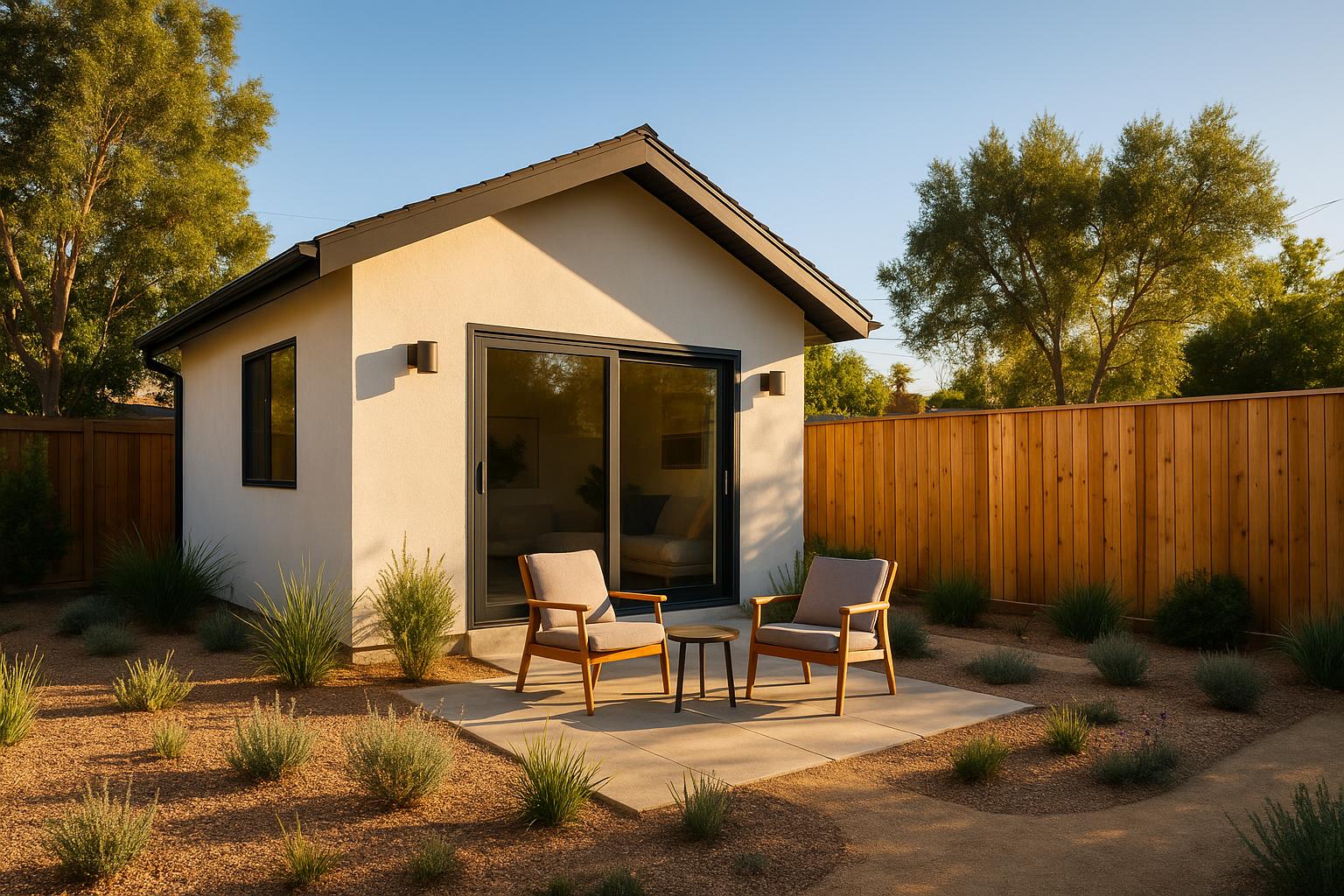
The Short Answer: Yes, You Need a Permit
If you're thinking about building an accessory dwelling unit on your San Diego property, one of the first questions you'll probably type into Google is whether you actually need a permit. The answer is yes — and skipping this step can lead to fines, forced demolition, and serious problems when you eventually try to sell your home.
But here's the good news: California and the City of San Diego have made the ADU permitting process significantly more streamlined in recent years. State laws passed between 2019 and 2023 removed many of the old barriers that made ADU construction slow and expensive. Understanding what's required today can save you months of frustration and thousands of dollars.
What Permits Are Required for an ADU in San Diego?
Building an ADU in San Diego typically requires the following permits and approvals:
- Building Permit: This is the primary permit issued by the City of San Diego's Development Services Department. It covers the structural, electrical, plumbing, and mechanical work involved in your ADU project.
- Plan Review: Before the building permit is issued, your construction plans must be reviewed and approved. The city checks for compliance with the California Building Code, zoning regulations, and local ADU ordinances.
- Electrical, Plumbing, and Mechanical Permits: These are often bundled into the building permit process but may be pulled separately depending on the scope of work.
- Grading or Drainage Permits: If your project involves significant changes to the land — common on San Diego's hillside lots — you may need additional grading permits.
For most standard backyard ADUs and garage conversions, the building permit and plan review are the main hurdles. The city has created a dedicated ADU review process to speed things along.
San Diego's ADU Rules: What You Need to Know
San Diego follows both California state ADU law and its own municipal code. Here are the key rules that affect most homeowners:
Size Limits
Detached ADUs can be up to 1,200 square feet for a two-bedroom unit, 1,000 square feet for a one-bedroom, and 850 square feet for a studio. Attached ADUs can be up to 50% of the existing home's living area or 1,200 square feet, whichever is less. Junior ADUs (JADUs) — small units built within the existing footprint of your home — are capped at 500 square feet.
Setback Requirements
State law requires only a 4-foot side and rear setback for ADUs, which is much more forgiving than traditional zoning setbacks in many San Diego neighborhoods. Front setbacks still follow standard zoning rules.
Parking
In most cases, San Diego does not require additional parking for an ADU, especially if your property is within half a mile of public transit. This single change has made ADU construction feasible on thousands of properties that would have been disqualified under the old rules.
Owner Occupancy
As of current California law, there is no owner-occupancy requirement for ADUs permitted through 2025. This means you can rent out both your primary home and your ADU, making it a genuine investment opportunity.
HOA Restrictions
If you live in a neighborhood with a homeowners association, California law prevents HOAs from outright banning ADUs. They can impose reasonable design standards, but they cannot block your project entirely.
How Long Does the Permit Process Take?
The City of San Diego is required by state law to approve or deny an ADU permit application within 60 days of receiving a complete application. In practice, the timeline depends on how complete and code-compliant your plans are when you submit them.
Common reasons for delays include:
- Incomplete or inaccurate architectural plans
- Missing engineering calculations for structural elements
- Non-compliant designs that require revisions and resubmittal
- Title 24 energy compliance issues
Working with a contractor who handles ADU permitting regularly in San Diego can dramatically reduce back-and-forth with the city. At Crimson Ridge ADU, we prepare permit-ready plans and manage the entire submittal process so homeowners aren't stuck deciphering correction letters from the Development Services Department.
What Happens If You Build Without a Permit?
We get it — the permit process can feel like a bureaucratic obstacle when you're eager to start building. But constructing an ADU without proper permits in San Diego is a serious risk:
- Stop-work orders: The city can shut down your project mid-construction.
- Fines and penalties: Code enforcement violations come with real financial consequences.
- Forced removal: In extreme cases, you may be required to demolish unpermitted work.
- Title and sale issues: Unpermitted structures create major complications when selling your home. Buyers' lenders typically won't finance properties with unpermitted additions, and you could be forced to retroactively permit the work — which is often more expensive than doing it right the first time.
- Insurance gaps: Your homeowner's insurance may not cover damage to or caused by an unpermitted structure.
The bottom line: permits protect your investment. They ensure your ADU is safe, legal, and adds real value to your property.
How Much Do ADU Permits Cost in San Diego?
Permit fees vary based on the size and scope of your project, but here's a general idea of what San Diego homeowners can expect:
- Plan check and building permit fees: Typically $3,000 to $8,000 for a standard ADU
- Impact fees: California law exempts ADUs under 750 square feet from development impact fees. Larger units may be subject to proportional impact fees, though these have been significantly reduced.
- School fees: These are assessed per square foot and usually add $2,000 to $5,000 depending on unit size.
- Utility connection fees: If your ADU requires a new sewer or water connection, expect additional fees. However, state law prohibits cities from requiring a new utility connection for ADUs built within an existing structure, such as a garage conversion.
All in, permit and fee costs for a San Diego ADU typically range from $5,000 to $15,000. It's a meaningful expense, but it's a fraction of total construction costs — and it's non-negotiable if you want a legal, permitted unit.
Tips for a Smoother ADU Permit Process
After guiding homeowners across San Diego, La Mesa, Chula Vista, and El Cajon through dozens of ADU projects, here's what we've learned makes the permit process go smoothly:
- Start with a feasibility check. Before you invest in architectural plans, confirm that your property qualifies for the type of ADU you want. Lot size, zoning, existing structures, and utility access all matter.
- Hire professionals who know local code. Generic plans downloaded from the internet almost always require costly revisions. Work with designers and contractors who understand San Diego's specific requirements.
- Submit complete applications. Incomplete submittals are the number one cause of delays. Every missing document resets the review clock.
- Plan for inspections. Once construction begins, you'll need to pass multiple inspections — foundation, framing, electrical, plumbing, insulation, and final. A good contractor schedules these proactively so work never stalls.
- Keep copies of everything. Your approved plans, permit card, and inspection records are important documents you'll want for insurance, refinancing, and future resale.
Ready to Build Your San Diego ADU the Right Way?
Navigating permits doesn't have to be the hardest part of your ADU project. With the right team handling design, engineering, permitting, and construction, the process can be surprisingly straightforward.
At Crimson Ridge ADU, we specialize in accessory dwelling units and home remodeling throughout San Diego County. Whether you're converting a garage in National City or building a detached ADU in Coronado, we manage every detail from initial feasibility through final inspection. If you're ready to explore what's possible on your property, reach out for a free consultation — we'll help you understand your options, your costs, and exactly what it takes to get permitted and built.